

Type 1 is for basic indoor protection, 3R adds outdoor weather protection, 4 covers hose-directed water and windblown dust, and 4X adds corrosion protection. Use 2020 NEC Table 110.28 to match the enclosure to the actual conditions. A larger type number does not automatically mean the right enclosure for every job.
Watch Victor use the enclosure-selection table
Victor works from the environmental conditions to the correct table column. The enclosure lesson starts at the beginning. Wire-bending space starts at 4:25.
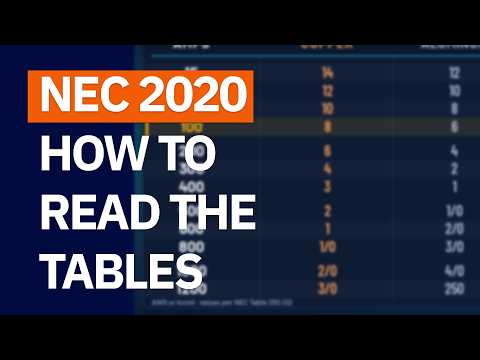 Watch Victor use the enclosure-selection tableWatch the existing JCR lesson on YouTube
Common enclosure types compared
| Type | Typical use and protection | Important limit |
|---|---|---|
| 1 | Indoor. Contact with hazardous parts and falling dirt | No rain or washdown rating |
| 3R | Outdoor. Rain, sleet and snow | Not a windblown-dust or hose-water rating |
| 4 | Indoor or outdoor. Windblown dust, splashing and hose-directed water | Does not add the 4X corrosion requirement |
| 4X | Type 4 protection plus corrosion protection | Not a submersion or explosion-proof rating |
| 12 | Indoor. Circulating dust and dripping noncorrosive liquids | Not an outdoor rain rating by itself |
These are short selection notes, not the complete test requirements. Check the equipment’s actual listing and the conditions in Table 110.28. Gore’s enclosure-rating guide explains the main protection categories.
Practice NEC equipment-selection questions
Turn lessons like this into test-day skills. Find the rule, work the calculation and practice with JCR’s mock exam questions.
Live classes teach the 2020 NEC. Check your state’s exam requirements before choosing a course. NC prep includes NC business and law. For another state, also study any business-and-law material required for your license. Need the code book? JCR carries the 2020 NEC softbound book.
Already licensed? Earn your CE with JCR
Choose in-person classes, live Zoom or recorded courses. Review NEC navigation, grounding and bonding, and other electrical topics. Check the course’s NEC edition, state approval and credit hours before enrolling.
See CE courses and class datesHow to answer an enclosure exam question
- Identify whether the enclosure is indoors or outdoors.
- List every exposure in the question: rain, dust, hose water, corrosion or submersion.
- Find the matching rows in Table 110.28.
- Choose a type with protection for all the stated conditions.
Practice question: an outdoor enclosure will face windblown dust, hose-directed water and corrosion. Choices are 1, 3R, 4 and 4X. Which type fits?
4X. Type 3R lacks the specified dust and hose-water protection. Type 4 lacks the added corrosion protection. If the question also includes submersion, reconsider the selection: 4X alone does not cover that condition.
Check the complete installation
Use compatible fittings, seals and accessories, and follow the mounting and entry instructions. A new opening can affect the enclosure’s environmental protection. For example, nVent’s Type 3R wiring trough provides product-specific installation resources. The rating is not permission to modify it any way you choose.
Common questions
Is NEMA 3R waterproof?
Use the specific exposure rating instead of “waterproof.” Type 3R addresses rain, sleet and snow. It does not provide the hose-water protection of Type 4 or a submersion rating.
Does 4X mean stainless steel?
No. It describes protection, not a required material. Hammond makes Type 4X fiberglass enclosures, for example. Match the material to the particular corrosive environment as well as the type rating.
Does 4X mean explosion-proof?
No. Hazardous locations require equipment suitable for the specific classification. A general Type 4X environmental rating does not establish that suitability.
Does the correct enclosure type settle every clearance requirement?
No. Environmental protection, internal space and access are separate checks. Review our NEC working-space guide and pull-box sizing example.
Keep practicing
Try our most-missed NEC mock exam questions and 2020 NEC practice questions. For each missed answer, find the section in your code book, read the rule and work the question again.
Reviewed October 25, 2026, for the 2020 NEC. Use the edition required by your licensing exam. Follow the adopted code and local amendments on the job.


